

10 May 2025
Scan QR, Log Entry
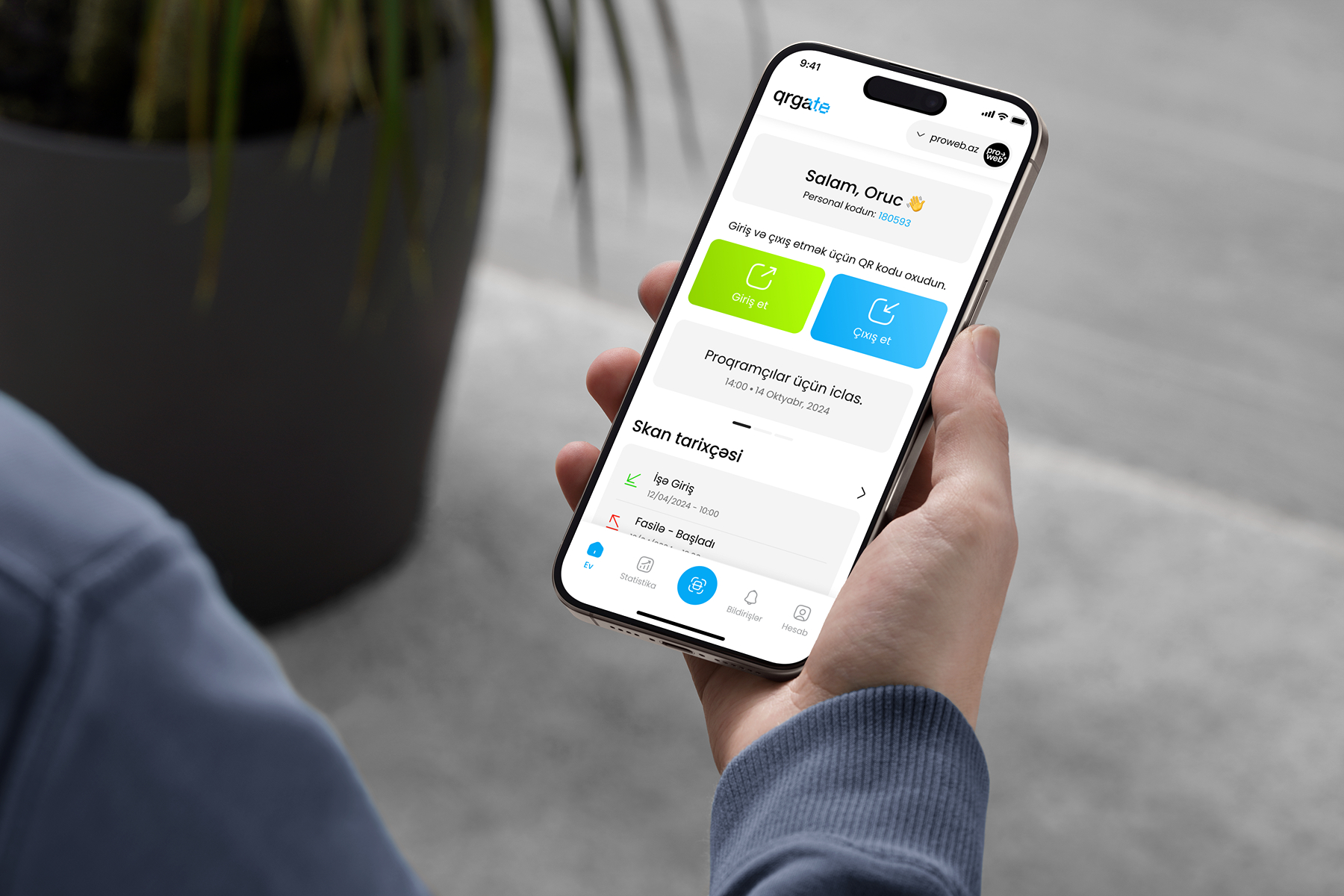
The main function of Qrgate is to let employees scan QR codes placed at entry points using the mobil...
MoreFollow what has changed in QRGate and which features have been added on this page.

Location context can be considered alongside attendance records for more reliable and transparent attendance control. The update does not change the record itself - it strengthens the context around it.
In QRGate, location data can be used as additional context within the attendance process. In the relevant scenarios a record now carries not only the question of "when" but also, where applicable, "where".
The purpose is straightforward: to give more to work with when assessing a check-in or check-out. That matters most for companies operating several sites or running teams that work away from a fixed location.
For security reasons, how location is verified - radii, the order of checks and protective mechanisms - is not disclosed in public content.
The practical benefit shows in three places.
First, transparency. When the context of a record is clear, the month-end question "where did this record come from?" stops appearing, and the follow-up correspondence around it drops away.
Second, field teams. Because records from staff moving between sites arrive with context, their attendance sits meaningfully in the same report as the office team's.
Third, trust. When something is disputed, the discussion rests on the record rather than on recollection - which serves both sides.
Location context does not replace the record and does not make decisions on its own. It gives HR and managers more to work with; drawing the conclusion remains a human task.
Nor does the update change attendance rules. The lateness threshold, the time-off process and schedule logic still follow the company's own configuration.
Location is a sensitive subject, and explanation is part of any rollout. In practice three things told in advance are enough: in which situations the data is considered, who can see it, and what it will not be used for.
With those three explanations, resistance rarely appears. Without them, the team fills the gap itself - usually with the worst assumption.
Location context does not replace the QR-based check-in process; it complements it. QR describes how the record was created, while location describes the circumstances in which it was created.
We cover the general logic of QR-based attendance on the QR code employee attendance system page, and the day-to-day tracking side on the tracking attendance with QR codes page.
The most common question here is how dependable the system is. Part of the answer is open: the richer the context around a record, the more accurately it can be assessed.
The other part is deliberately withheld - publishing internal verification rules reduces their value. We explain the general approach on the is a QR check-in system secure page.
The update is felt most in three situations: companies with several sites, teams working at customer locations, and services where the point of work is not fixed.
For a team working in one office through a single entrance, the difference is smaller.
The main function of Qrgate is to let employees scan QR codes placed at entry points using the mobil...
MoreA chosen report can be set up in advance to be prepared daily, weekly or monthly and delivered to th...
MoreAttendance data can now be used to prepare timesheets by month, year and branch, with Excel and PDF...
More