

The question usually comes out of a specific situation: there is no budget for hardware, the landlord will not permit installation, sites change often. Is it possible to run attendance without fingerprints?
The answer is yes, with one condition: what makes a record reliable is not the method but the layers built around it. Every step of that setup is below.
What the recording point consists of
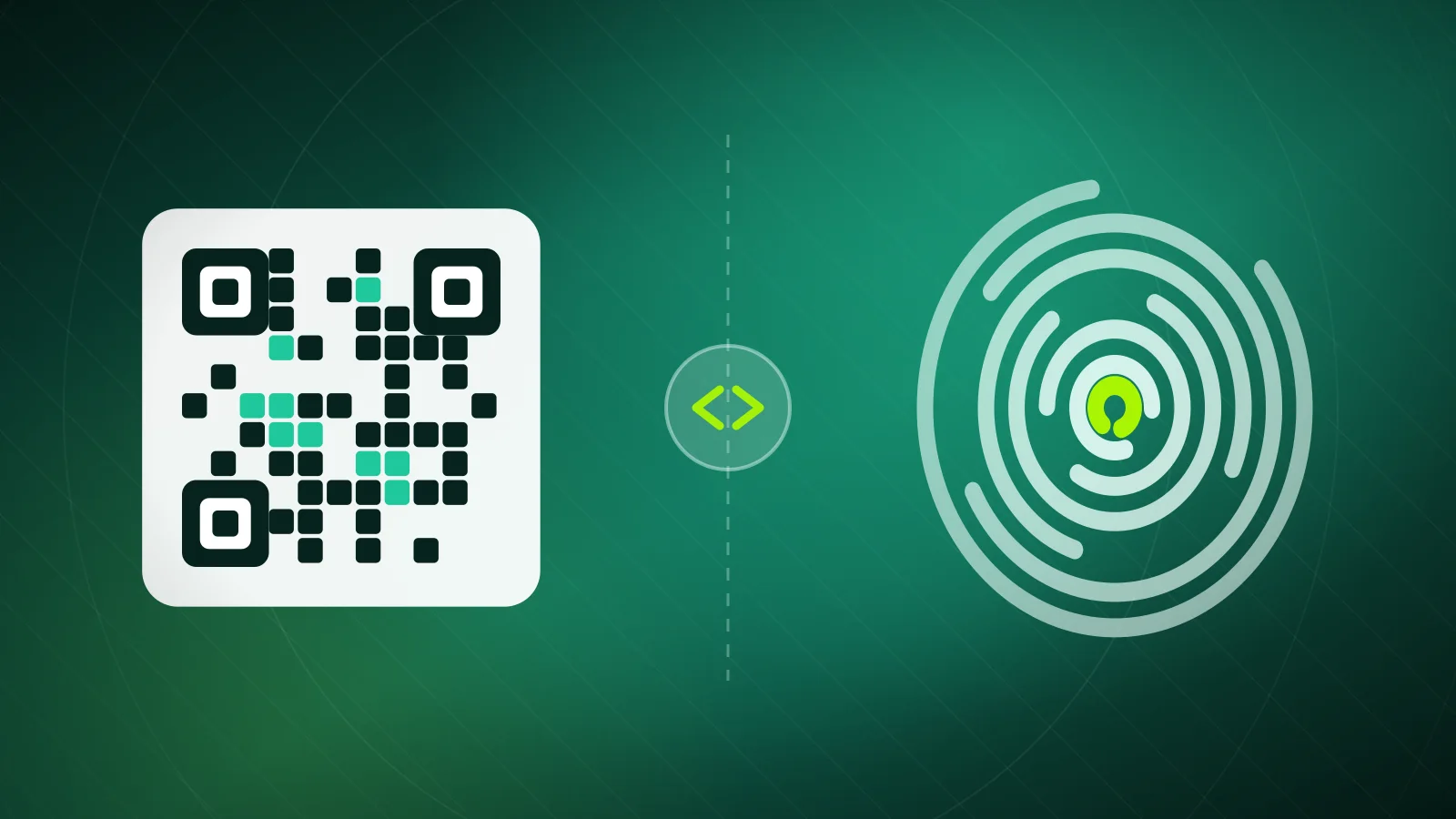
In a hardware-free model the recording point is made of two things: a code placed at the entrance and the app on the employee's own phone.
What matters is that the point sits inside the structure - attached to a branch, a department or a specific entrance. Without that link the record is just a timestamp; with it, the record later answers "at which site". In a company with branches, a warehouse and retail points, that single detail decides whether the reporting is usable.
Because no installation, cabling or hardware acceptance is required, opening a new site creates no extra budget line.
Binding the record to a person
This is the most frequently asked question: can someone photograph the code and send it to a colleague?
If the reliability of the record rested only on the existence of the code, that would be a real problem. In practice the record passes through several layers:
- Device - the device the record came from is stored, and device history is kept.
- Device change - moving to another device appears as a separate event and the relevant people can be notified. Two devices of the same make and model can be identified as distinct devices.
- Location - the record is matched against the location of the entry point.
- Notification - a mismatch reaches the responsible person, so the matter is discussed the same day rather than at month end.
Control therefore moves out of the code itself and into the context around the record. The full explanation is on the is a QR check-in system secure page.
Employees without phones
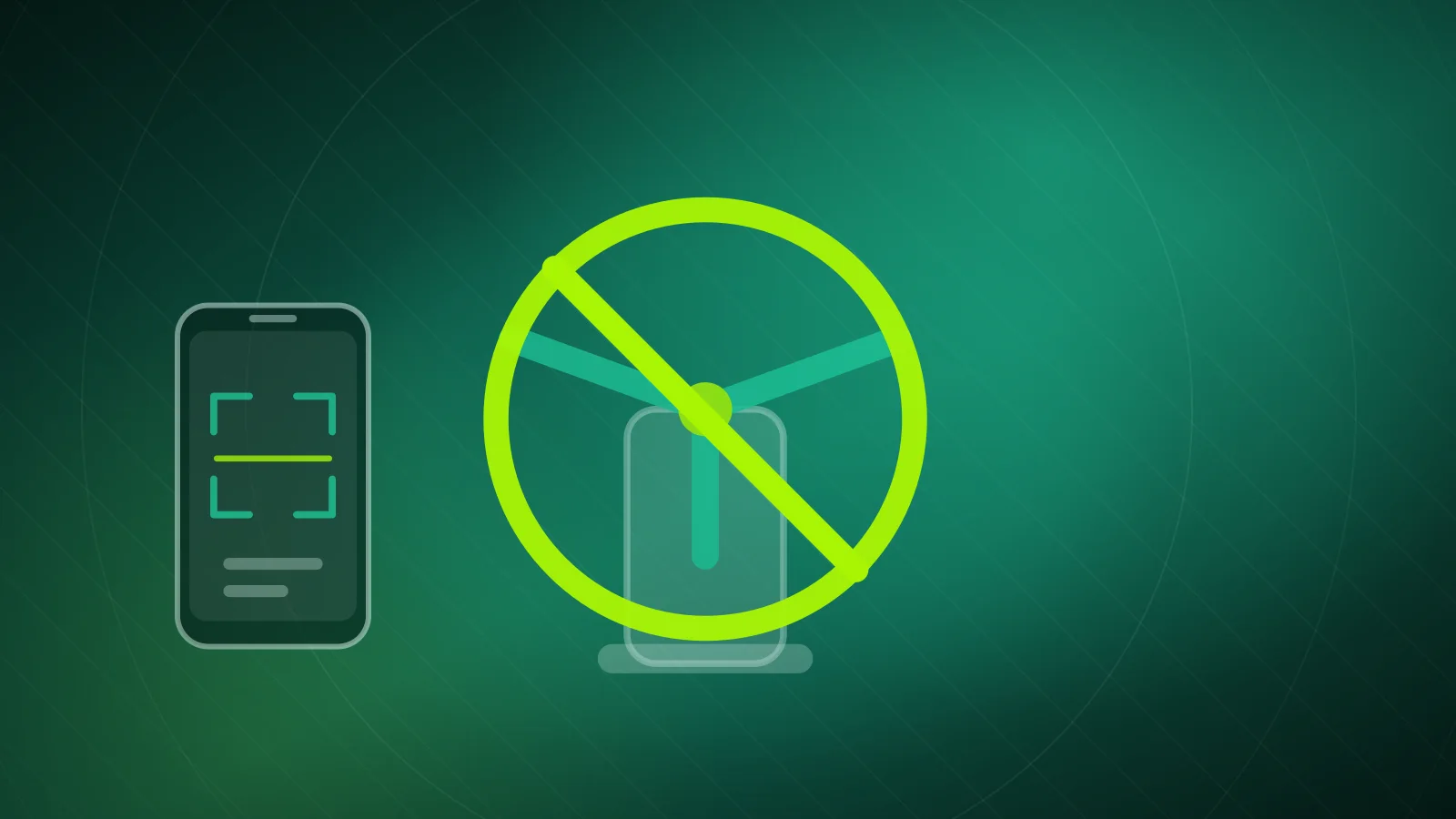
Every company has employees without phones, or areas where phones are not allowed. That is not a weakness of the model - it is a case to plan for.
Two routes exist and both sit inside the same system. An NFC point works faster at a loading area where hands are full, or at an entrance where a queue forms. A manual record is entered by the manager and leaves a trace with its author and timestamp.
The most important principle: the exception has to live inside the system. An exception kept on a separate paper list or in a separate file becomes a second source at month end and pulls the record back into reconciliation work.
How to test the conditions
A hardware-free model is sensitive to conditions in a different way, and that difference should be known before rollout.
Because the reading happens on the employee's own device, dirty hands, gloves and poor lighting do not stop the record - the most common complaint about fingerprint terminals. In exchange two new conditions appear: phones must be permitted on site, and coverage must be adequate.
The trial should therefore run at the weakest point - the back of the warehouse, a basement floor, a remote site. A trial in the office makes the result look artificially good and pushes the decision in the wrong direction.
Reporting requirements do not change
Changing the recording method does not change what is expected of the system: the record is compared against the work schedule, the rules on lateness, breaks and overtime are applied, and a ready timesheet comes out.
Five points should be checked concretely during a demo: are there branch and department cuts or only one general list; is the method the record was made by visible; do corrections leave a trace with author and reason; are leave and time off in the same timesheet; does the export format match what accounting expects.
Left unanswered, the system turns into nothing more than a store of records, whatever method it runs on.
Setup sequence
- Write the rules: lateness threshold, breaks, exceptions, work schedules.
- Build the structure: branches, departments, entry points.
- Trial it in one unit - the one with the hardest conditions.
- Run a parallel month.
- Switch on notifications - for one event at first.
- Measure the four indicators after three months.
A worked example: a rented office
A services company rented two floors in a business centre. The building had its own turnstile, but the records were not passed to tenants.
The company wanted to install a terminal at its own entrance and was refused: mounting to the wall was against the lease.
The solution lay in the recording point not being a physical device. The code was placed in a frame in the reception area and the point was registered in the structure as "head office".
A year later the company moved to another building and the move took one day: the code was reprinted and the point's address updated. Nothing was dismounted, because there was no device.
Four indicators to measure in the first month
Sensing the result of the switch is not enough - it has to be shown as a number. Four indicators are sufficient, and all of them must be recorded before the rollout:
- Hours spent preparing the monthly report.
- Rows corrected by hand each month.
- The number of disputed records.
- The date the timesheet closes.
The same four are measured again three months later. In practice the second moves fastest - rows corrected by hand - because reminders and transparency start working together.
These numbers serve both as an evaluation of the project and as the budget argument for the next stage.
The next step
The practical advantage of starting without buying hardware is that the decision stays reversible: if the trial does not deliver, the only thing left behind is a written document of your rules - and that is useful either way.
See the full setup method, look at what QRGate does, or calculate the price.