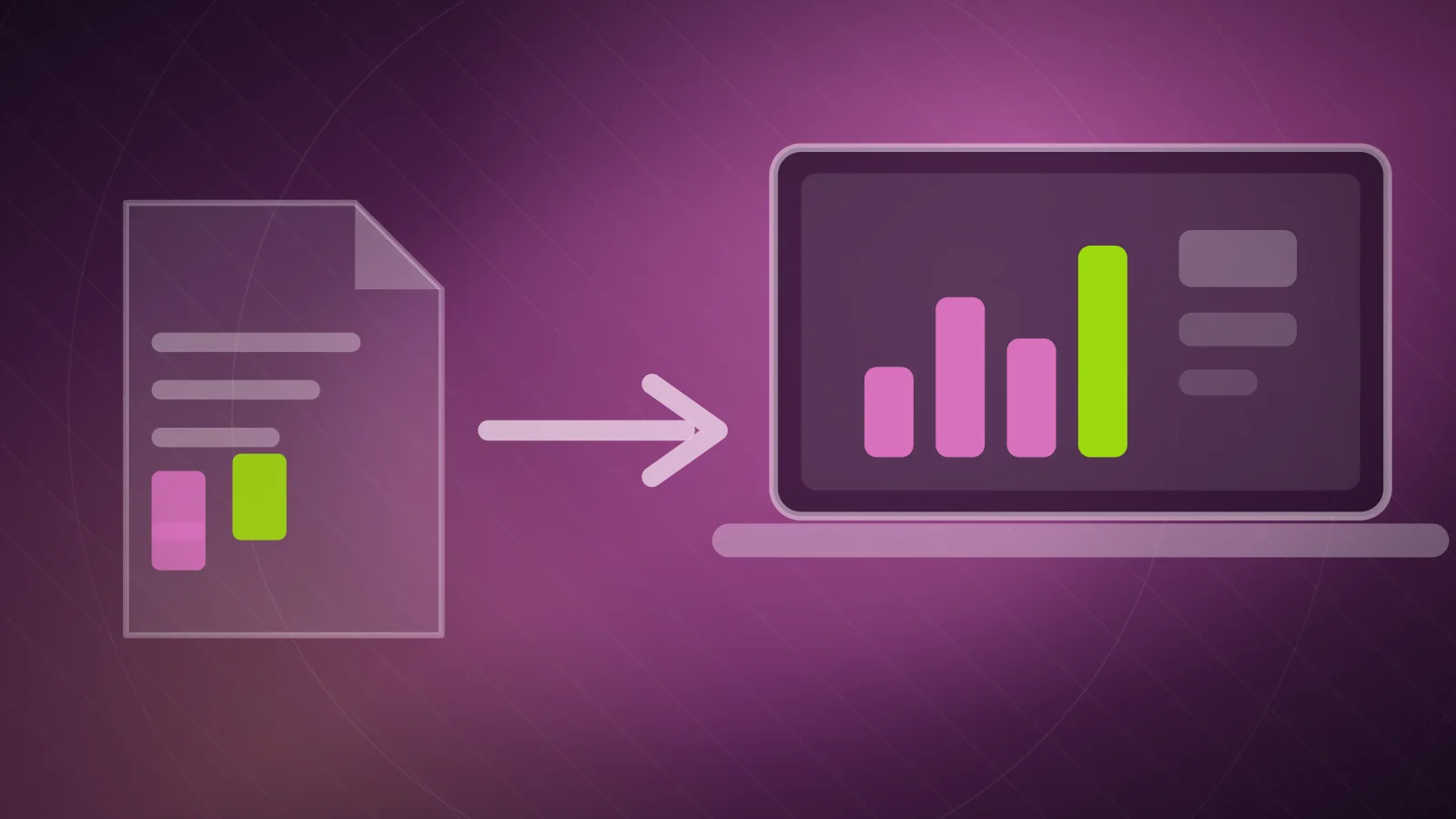



One of the first questions after a company moves attendance into a system is usually: "So we do not need Excel any more?" The answer is not the one people expect. An attendance Excel PDF export is not a weakness of the system - it is its boundary. The system holds and manages the data; the export carries that data outside it, to finance, to the board, to the archive or to an auditor. The problem was never the export itself. It is which file counts as the single source of truth.
Why exports still matter
Even the best system does not cover a company's entire process. Three boundaries always remain:
- Other systems. Payroll software does not read your attendance platform directly.
- People without access. An auditor, a lawyer or a shareholder usually wants the report as a file.
- Formal documents. Where a signature is required, a screenshot will not do.
An export is therefore not a replacement for the system but its exit door. Once that is accepted, the question changes: not "do we need Excel?" but "which format for which situation?"
Where Excel is the right answer
Excel is strong at one thing: reworking data. That makes it the right choice in four situations:
- Handover to finance. When figures must be moved into another template or extended with calculated columns.
- Ad-hoc analysis. Building a pivot, slicing the data for one specific question.
- Reviewing a long list. Sorting and filtering hundreds of rows.
- Import into another system. An intermediate format for payroll or ERP.
The important nuance: in none of these is Excel the source of the data. It is a processing tool. The distinction sounds academic until month-end.
Where PDF is the right answer
PDF is strong at the opposite thing: keeping data unchanged.
| Need | Suitable format | Reason |
|---|---|---|
| Further calculation | Excel | It is editable |
| A document to be signed | The layout is fixed | |
| Sending to the archive | Not open to accidental edits | |
| Import into another system | Excel | The structure is readable |
| A short summary for management | Tidy and ready to read |
The practical rule is simple: PDF if it will be read, Excel if it will be worked on. Mixing the two is the most common mistake - once an editable copy of a signed timesheet starts circulating, nobody can say which version is official.
Filter first, export second
The value of an export often lies not in the format but in the step before it: deciding what goes into the file.
Dumping a whole month, every site and every employee into one sheet is easy and rarely useful - whoever opens it has to filter it again. The actual question is usually narrow: "lateness in the north branch in March" or "leave days for this role".
Applying the filter in the system and exporting afterwards buys you two things:
- The file is small and readable.
- The recipient does not reprocess the data, so there is less room for error.
We describe the building blocks of such a report on the attendance report page.
Why the master record belongs in the system
This is where the real argument sits. Exports are useful on one condition: that the exported file is a copy and not the original.
If the master data lives in a spreadsheet, three problems are unavoidable:
- Multiple versions. The same month exists in three files and nobody is sure which is correct.
- Lost history. Who changed what, and when, has no answer.
- Consolidation load. Every additional site lengthens the merge.
When the system is the master, an export is simply a snapshot of that moment. Delete the file and nothing is lost. We cover that separation in more depth on the working time recording and electronic timesheet system pages.
A practical example
A retailer with five branches required an Excel attendance file for finance every month. That requirement survived the move to a system - and rightly so, since payroll ran on separate software.
What changed was the origin of the file. Previously it was assembled by hand, and finance came back with three or four clarifying questions each month. Now the file is exported from the system with the filter already applied, and those questions have essentially stopped.
The company did not give up Excel. Excel simply stopped being the master document and became an output format.
How to test your own process
One question is enough: if someone deleted this month's attendance data, where would you restore it from?
If the answer is "from the branch manager's file", the master record is still a spreadsheet. If the answer is "from the system", your exports are doing exactly what they should and carry no risk.
How often should you be exporting?
Having an export capability does not mean using it daily - and in practice the frequency is a useful diagnostic.
In a company with a healthy process, exports happen a few times a month: the timesheet to finance, a summary to management, a copy to the archive.
If exports are a daily routine, that usually signals a different problem: role-based visibility was never set up, so everyone asks for the data as a file.
The test is simple. Count last month's exports and ask of each: could that person have seen the data in the system instead? Where the answer is yes, the export was unnecessary - and every unnecessary export is another copy in circulation.
One sentence to keep
All of the above compresses into one line: the system is the memory, an export is a message.
Memory should be singular and stable. Messages can be many, chosen by need, and short-lived.
Next step
Count the attendance files you sent out last month and ask of each one: was that a copy, or the original?
QRGate keeps attendance, lateness and timesheet data in the system and exports to Excel and PDF when you need it. See what QRGate can do or calculate the price.