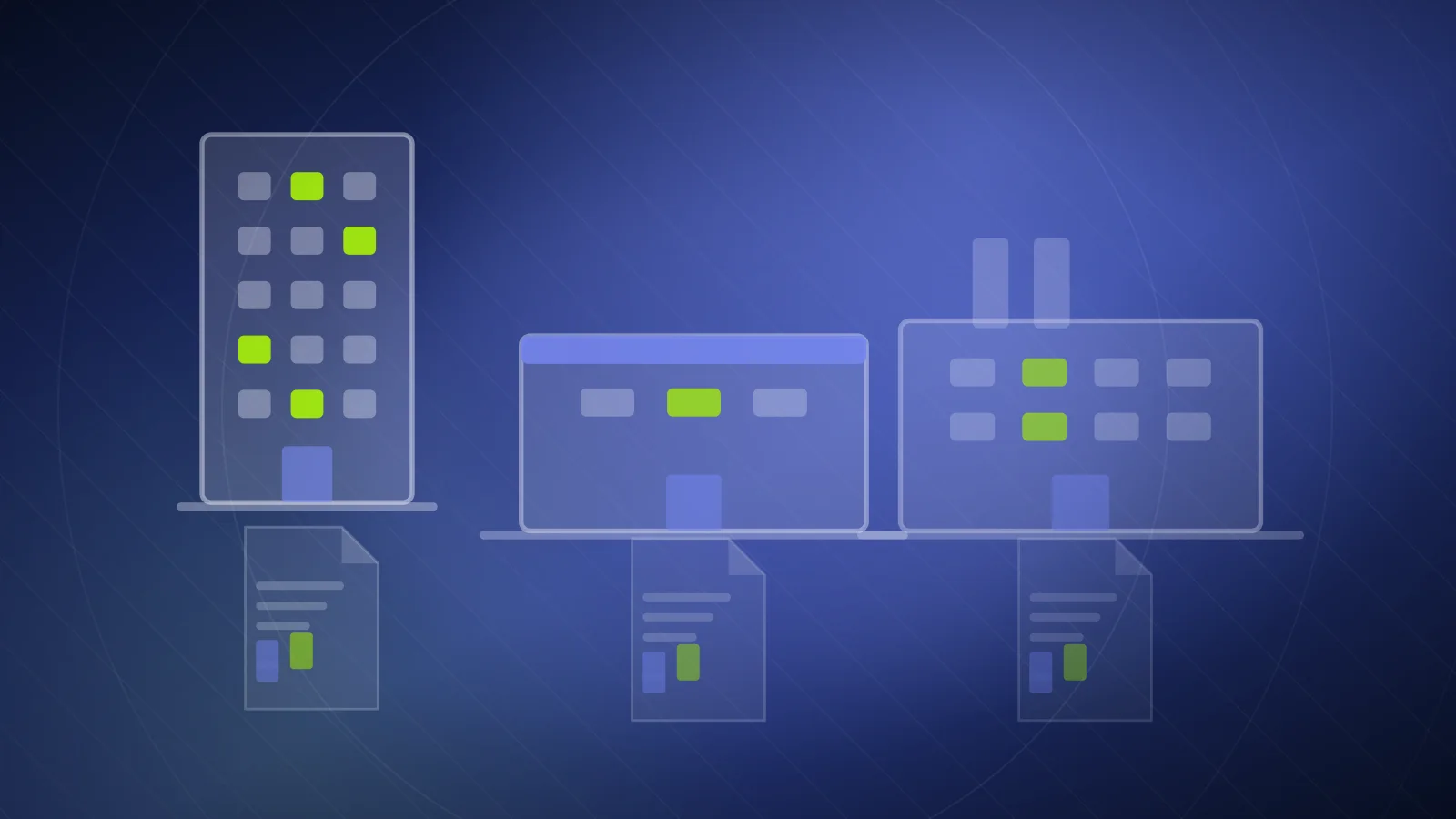


A regional retailer with three stores had the same routine every month. On the third working day the HR manager merged three spreadsheets sent by the branch leads, phoned each of them to resolve the mismatches, and finally produced the monthly attendance report. By the time the file was ready, the next month was already under way. Real-time attendance visibility closes exactly that gap: a manager sees who is in, who is late and which site is short-staffed on the day it happens, not four weeks later. The difference is not the amount of data - it is when the data arrives.
Why month-end reporting produces late decisions
A monthly report is not a bad instrument. The problem is its timing. A file finished on the third of the month describes everything that happened between the first and the thirtieth, and not one of those events can still be influenced.
In practice this creates three kinds of loss:
- The window for correction closes. If you discover at month-end that someone has been late for three consecutive weeks, the conversation is no longer preventive - it is disciplinary.
- Coverage gaps surface too late. If a morning shift runs with one person instead of two, that needs to be known within the hour, not the following day.
- Disputes have no evidence. "I was there that day" is very hard to review a month after the fact.
Put differently: a month-end report explains what happened. It does not answer what can still be changed.
The operational value of same-day visibility
Seeing the current picture during the working day gives a manager three concrete options: redistribute workload the same day, ask about a late arrival while the reason is still fresh, and arrange cover before a shift runs short.
The value shows up most clearly in service operations. In a shop, at a reception desk or on a production line, one missing person turns into a customer queue within an hour. At month-end you can calculate what that cost. You cannot prevent it.
| Question | With a monthly report | With live visibility |
|---|---|---|
| Who is in today? | No answer | Visible immediately |
| Is lateness repeating? | At month-end | Within the same week |
| Is a site short-staffed? | Found out afterwards | During the morning |
| When is the decision made? | After the event | During the event |
| Reviewing a dispute | From memory | From the record |
HR and line managers do not need the same view
This is the point most often blurred: HR and a department head do not need identical information.
A line manager wants a narrow, deep view - who is on my team today, who is missing, who arrived late. Annual trends are irrelevant to that decision; today's picture is everything.
HR wants a wide, comparative view - where lateness is rising, which roles show attendance problems, when leave requests cluster. That is a picture of weeks, not of a single morning.
One shared system feeds both from the same source. When each side keeps its own spreadsheet, each side also keeps its own version of the truth, and the numbers stop matching at month-end. We covered how that split forms on the monitoring employee attendance page.
Central visibility once you pass one site
In a single office, live visibility is a convenience. Across five sites it becomes a requirement.
The reason is arithmetic. The more locations you add, the longer collection takes. Merging three branch files is half an hour; merging ten is half a day. On top of that each location develops its own template, its own naming habits and its own small exceptions.
With central visibility a branch is a filter, not a separate file. A manager looks at the whole network on one screen and then narrows to one site. That movement - from the aggregate to the specific - is essentially impossible to perform in a manual process.
This is the point where a single platform such as QRGate becomes useful: attendance, lateness, leave and time-off records sit in one context, and the branch becomes a selection rather than another attachment in an email thread.
Live data and monthly reporting work together
Live visibility does not replace the monthly report. They answer different questions and are strongest in combination.
- During the day - the operational decision: who is missing, how is the shift covered.
- Weekly - the trend decision: is lateness increasing or falling.
- Monthly - the documentation and finance decision: timesheet, payroll preparation, archive.
The common mistake is skipping the first two layers entirely and keeping only the third. The result is a report that is accurate and late. We describe the building blocks of that report on the attendance report page, and how to read the numbers on the analysing attendance indicators page.
A practical example
After the retailer above moved to daily visibility, the first month produced no dramatic discovery. Two changes were nevertheless measurable.
First, by ten in the morning branch leads already knew who had not arrived, and cover was arranged the same day - previously this slipped to the afternoon. Second, the time spent preparing the month-end report fell from roughly three working days to half a day, because the data was already collected and only needed checking.
The third result was the unexpected one: conversations about lateness became less frequent. The explanation was simple. When the record is visible to everyone, it stops being something to argue about.
How to decide whether you need this
Moving to live attendance visibility is not equally urgent for every company. Three questions usually settle it:
- Do you run more than one site or more than one shift pattern?
- How many hours go into consolidating attendance data at month-end?
- How often do attendance disputes come up?
If the answer to all three is yes, your problem is not the quality of the report but its timing - and timing can only be fixed by changing how the data is collected.
Next step
One number is enough to start: how many hours went into collecting and reconciling attendance data last month?
QRGate keeps attendance, lateness, leave, time-off and timesheet data in one place. See what QRGate can do or calculate the price.